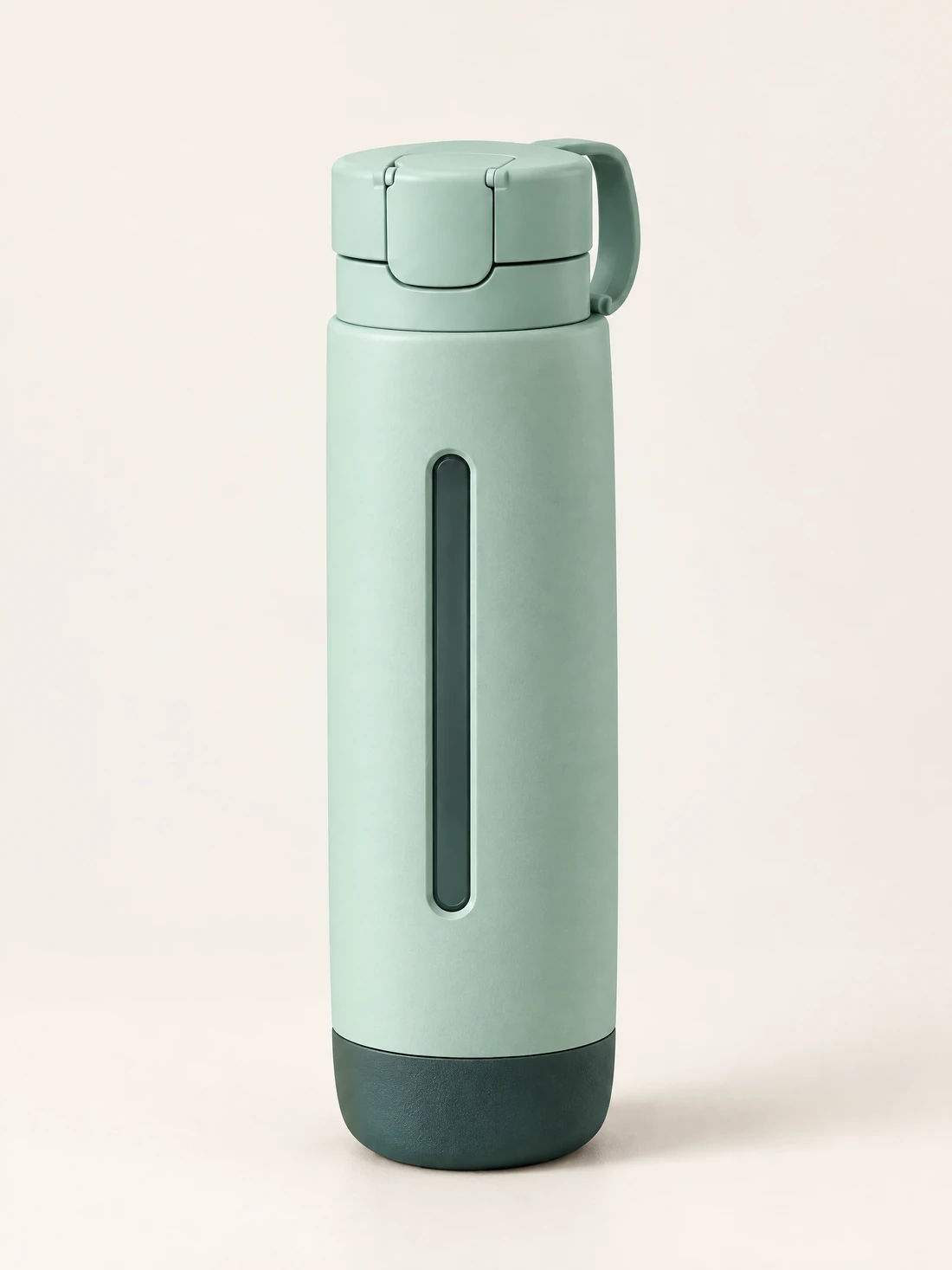
A premium water bottle prototype designed around a direct volumetric path inside the lid. Testing is underway to validate the approach where the sip happens.
PROPOSED CAPACITY1.0 L/ 34 FL OZ
STATUSPrototypeFunctional prototype · active testing · engineering validation in progress.
Choose a finish direction to explore the proposed palette. Each option is a design study, not a production-color confirmation.
SELECTED DIRECTION / Seafoam
The original GULPR Aqua finish study. This original finish artwork is illustrative; final production color, materials and availability are not confirmed.
FINISH SELECTOR / DESIGN DIRECTION ONLY
CAPACITY DIRECTION
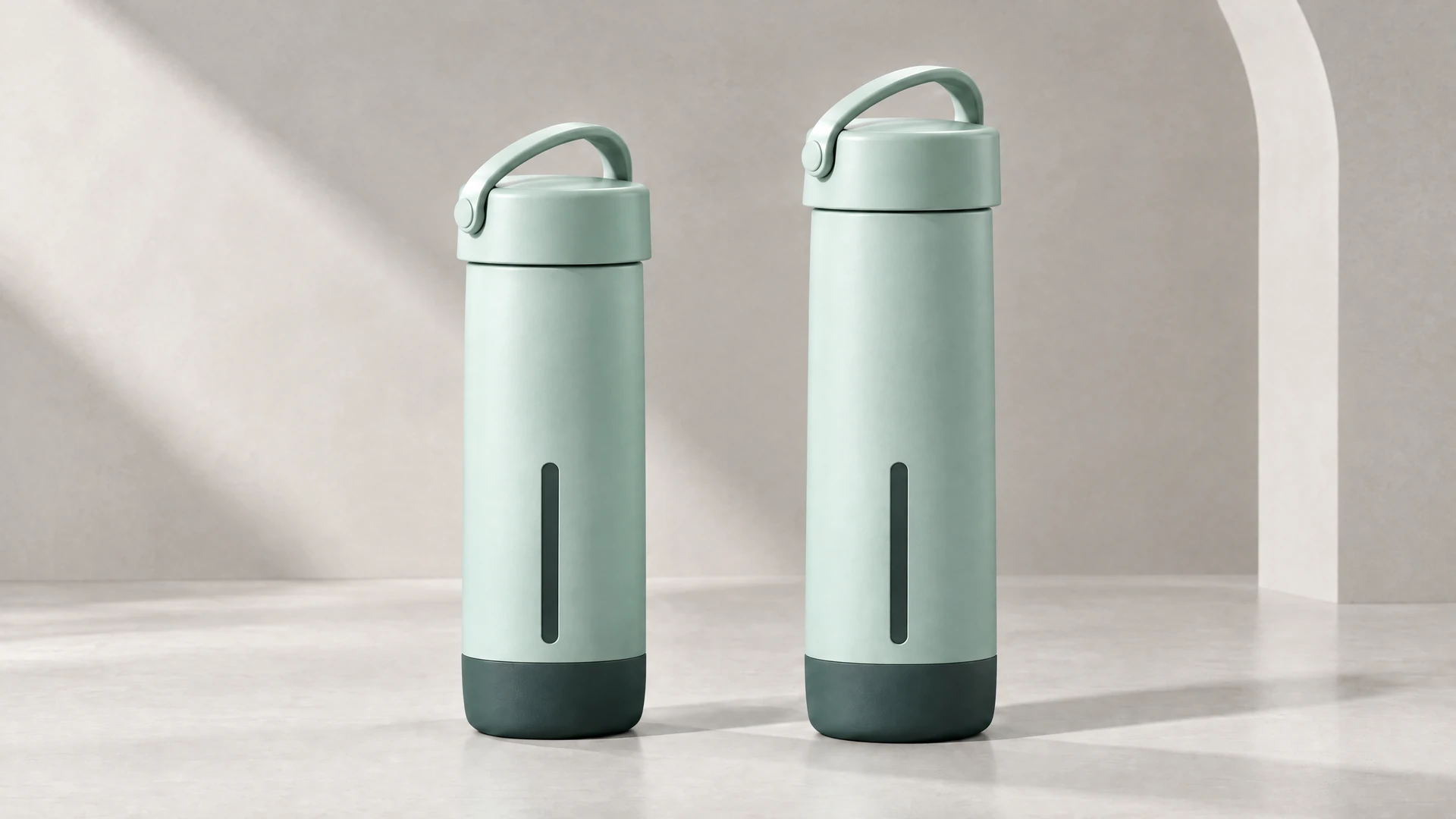
Two sizes, one approach.
The 1.0 L / 34 fl oz concept is the current proposed standard capacity.
A full-diameter wide mouth is the proposed starting point for filling, access, and a direct path through the lid.
Material direction: glass interior, brushed stainless exterior, ceramic wet-side components, and silicone seals and base guard. These are concept directions—not confirmed specifications, mold-resistance claims, or hygiene claims.
PROPOSED COMPONENT PALETTE
Glassinterior direction
Steelbrushed exterior direction
Ceramicwet-side gear direction
Siliconeseals + base guard direction
WET-SIDE CLEANING / PROPOSED
Access the path. Then care for it.
The proposed wet-side system includes a removable straw, a stainless cavity, and two ceramic gears separated from a sealed dry bay.
STEP 1 / OPENOpen
Proposed lid access begins at the wide-mouth opening, with the wet-side path kept distinct from the sealed dry-system bay.
GULPR / DESIGN NOTES
The details, kept in view.
Explore the original public design notes and validation boundaries behind this product direction.
Two capacities. One GULPR direction.
Capacity labels are public product-direction studies, not final dimensions or production specifications.
Standard 1.0 L / 34 FL OZ · Daily carry study. The core GULPR bottle direction: a proposed one-liter vessel for the rhythm of an everyday day.
XL concept 2.0 L / 68 FL OZ · Large-vessel study. A proposed extra-large direction for longer days, with a larger lid and flow study.
Relative scale direction only. Final proportions, dimensions, and construction require engineering validation.
Illustrative Standard 1.0 L and XL 2.0 L form comparison, not final dimensions.Full-diameter mouth. Reach the whole inside.
Designed around a full-diameter wide mouth, not a narrow opening. The proposed opening gives hands and cleaning tools a more direct route to the inner wall and hard-to-reach areas. The material direction pairs a glass interior with the vertical sip-window concept, then uses stainless steel, ceramic components, and silicone seals elsewhere in the bottle and lid.
Opening / Full cap diameter: proposed wide-mouth access to interior walls.
Vessel / Brushed stainless: proposed exterior body and wide mouth.
Interior / Glass and sip window: proposed interior and vertical-view system.
Interfaces / Ceramic and silicone: proposed wet components, seals and base guard.
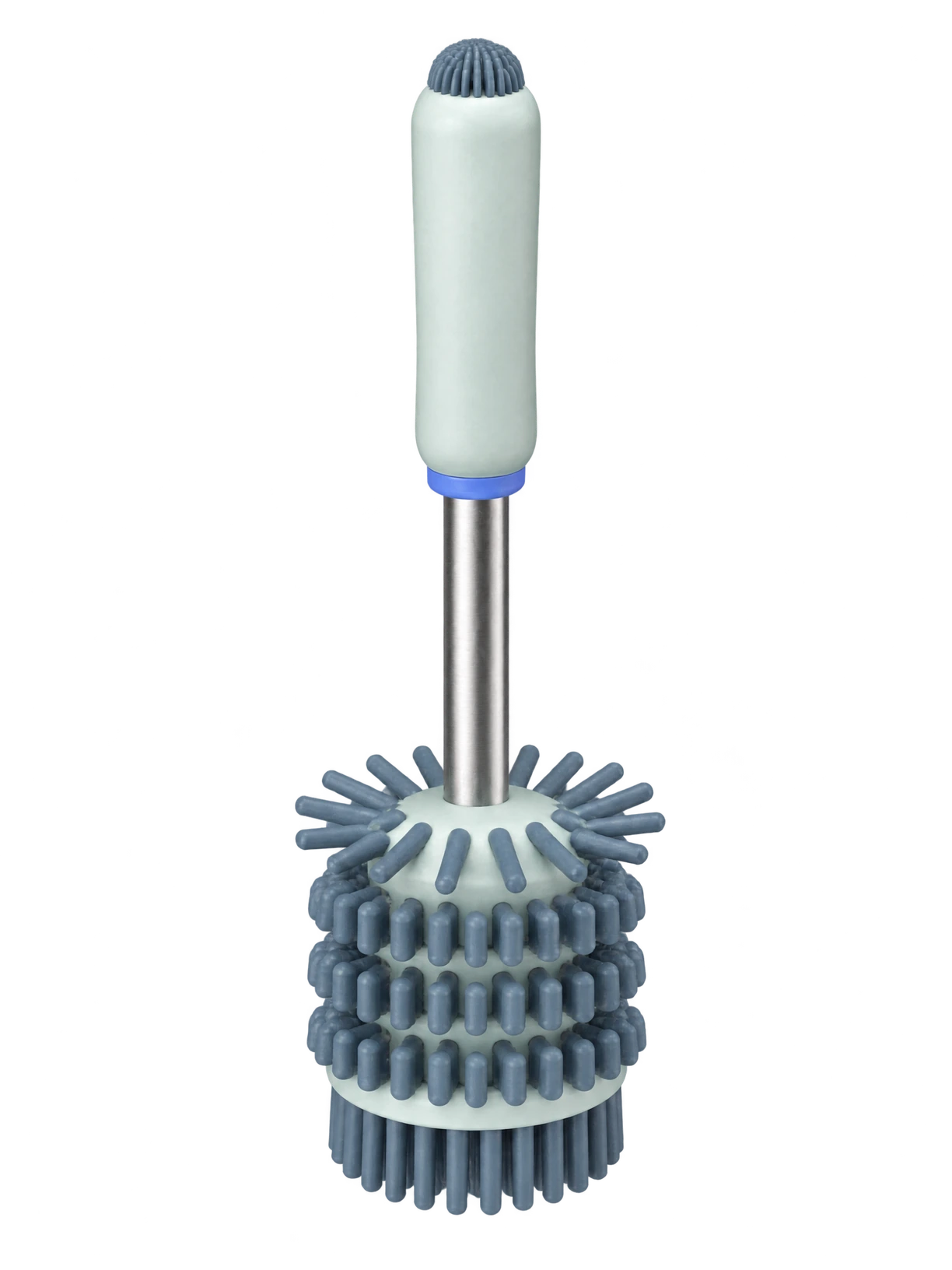
Care / Full contact scrub capsule: proposed layered bristle head for interior access.
The companion brush direction uses a layered sidewall bristle barrel, upper halo, lower base skirt, and top detail dome to illustrate all angle interior access. It is not a confirmed bundle or care guarantee.
Why the wide mouth matters: narrow-mouth bottles can make it difficult to see and reach the interior. This proposed full-diameter opening is intended to make the inner wall and hard-to-reach areas more accessible for future rinse-and-wipe care. It is a cleaning-access direction, not a mold-prevention or hygiene-performance claim.
Final care guidance, brush design and bundle, bristle stiffness, dimensions, glass integration, materials, seals, fit, drop protection, and manufacturing performance require engineering validation.
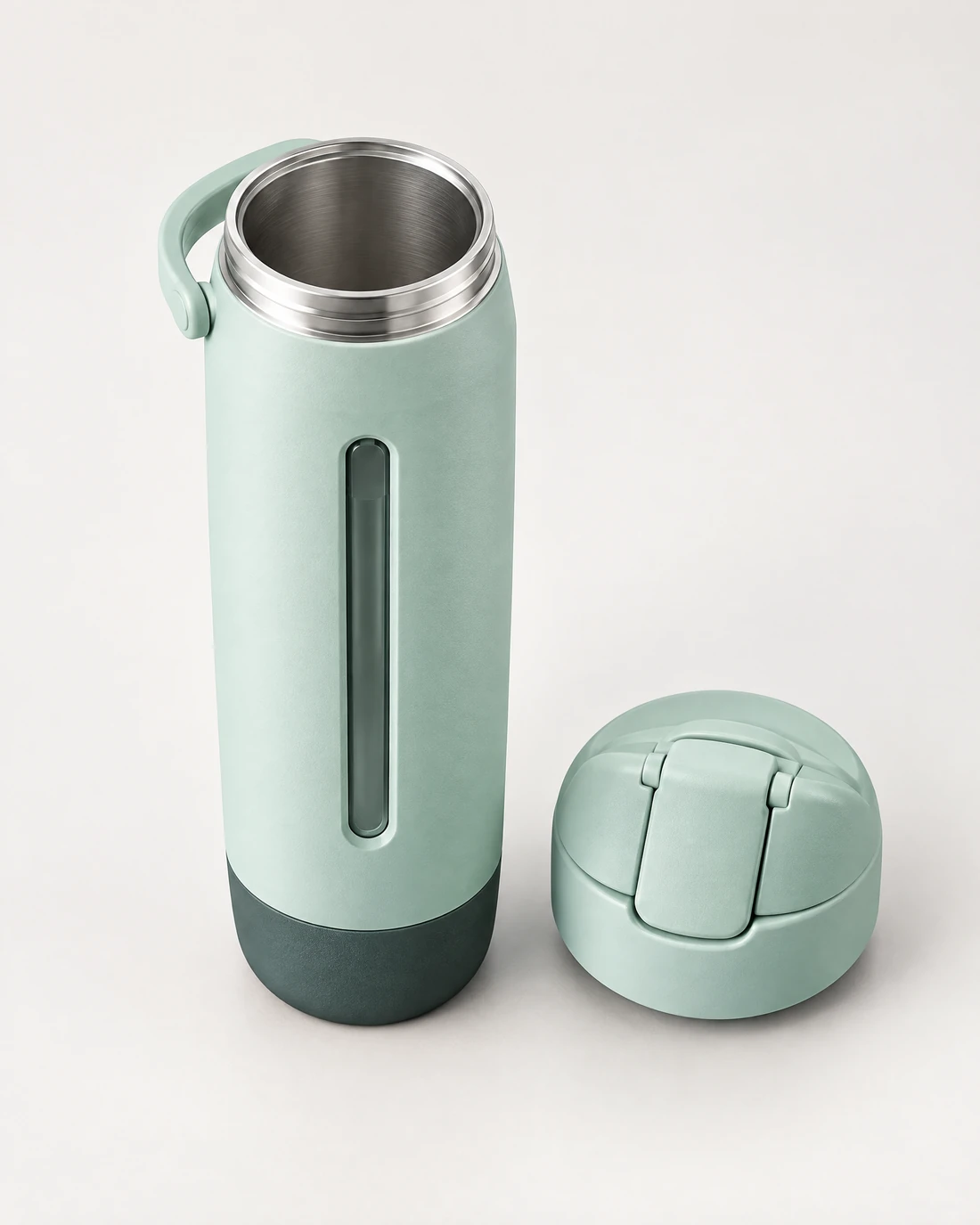
Illustrative straight-sided Seafoam bottle with oversized lid removed and full-diameter opening.Bottleneck versus full-diameter opening.
The proposed full-diameter concept keeps the opening close to the vessel width instead of narrowing the access route at the top.
Conventional comparison / Narrow-mouth bottleneck: smaller opening relative to the vessel body.
Proposed GULPR direction / Full-diameter mouth: opening follows the illustrated vessel width.
Qualitative access illustration only. It is not a final dimensional specification or a cleaning, hygiene, or mold-prevention performance claim.
Three simple access cues:
See the inner wall: more of the illustrated interior is visible from above.
Direct hand and tool route: the study shows a less constrained top opening.
Open-care direction: future care guidance still requires validation.
Bottle lid care. Proposed wet-side insert.
Illustrative care direction: the proposed removable straw, stainless-steel cavity, and two ceramic gears stay on the wet side. The dry-system bay remains outside this care path.
Wet cavity: stainless steel and two ceramic gears.
Flip-up straw: stainless inlet to wet cavity.
Dry-system bay: proposed computer-grade silicone fill, sealed region.
Wet-side insert / service access study. The original illustrative labels “Lift. Rinse. Return.” describe a design animation, not an owner procedure. The proposed removable straw, two ceramic gears, and stainless-steel wet insert are shown apart from their illustrated lid seat. The proposed computer-grade silicone-filled sealed dry bay stays outside this care path.
Wet-side only: rinse route stops before the sealed dry bay.
Two-piece view: insert shown apart from its lid seat.
Dry-side direction: proposed computer-grade silicone fill. Final sealing requires validation.
The rinse-path overlay concerns only the open wet cavity. The proposed computer-grade silicone-filled dry bay is separate. Final lid geometry, materials, fill method, battery, radio, sensing, energy, sealing, cleaning process, and hygiene performance require engineering validation.
Full contact bottle brush.
The illustrative scrub capsule stacks a sidewall bristle barrel, upper halo, lower base skirt, and top detail dome. Final bristle stiffness, materials, fit, durability, and care guidance require engineering validation.
Open: the design view shows the proposed open-access cavity. This is a visual study, not an instruction to open or service a product.
Pop out: the proposed wet-side insert groups the illustrated stainless-steel cavity and two ceramic gears so they can pop out together, away from the dry-system bay.
Rinse: the design view identifies a proposed wet-side access region around the cavity and ceramic gear insert, separate from the dry-system bay. No owner rinse or handling procedure is specified.
Care: final owner instructions require confirmed components and engineering validation. This study is not a cleaning or reassembly manual.
Illustrative proposed all-angle bottle brush: sidewall bristle barrel, upper halo, lower skirt and detail dome.A better bottle starts with a better question.
What if the bottle could explore measurement at the point of drinking, not just remind you to drink again? The proposed GULPR form brings that question into an everyday carry object.
Finish and feel: visual study. Full-diameter wide mouth: see and reach inside. Vertical sip window: form cue. Signals and sharing: concept only.
Illustrative product design. Dimensions, materials, performance, and availability require engineering validation.